
blogcast
bodymind
Welcome to the bodymind blogcast, where powerful stories and thought-provoking conversations come to life.
Through solo insights, guest conversations, and real stories from the community, discover how to integrate the power of intellect with intuition. New episodes are released weekly, and include bite-sized clips of 5-20 minutes each, as well as in-depth explorations of 20-45 minutes.
Latest bodymind episodes
explore the full bodymind blog
CATEGORIES

The Tuning Fork Effect: How Your Nervous System Healing Ripples Out to Heal the World
What if your personal healing work was actually planetary service? What if every moment you spend regulating your nervous system creates ripples of healing that extend far beyond yourself?
In today’s episode, I’m exploring the science and mystery of how we affect each other through our nervous systems, and why your commitment to authenticity might be one of the most important contributions you can make to the world.

The Fertile Darkness: When Your Body Knows What Your Mind Doesn't
Discover how your midlife body might be working magic you can’t see. This personal story from Feldenkrais training reveals why trusting your body’s natural learning process - even when your mind doubts it - can lead to breakthrough moments. Learn about the “fertile darkness” and how your nervous system continues learning and integrating new patterns long after formal lessons end. Perfect for midlife women learning to trust their bodies again and embrace the wisdom that comes with age.

How Worth Wounds Keep You From Trusting Your Natural Rhythms
Discover how worth wounds keep us from honoring our natural rhythms. A somatic coach’s 30-year journey from knowing her body’s needs to finally trusting them - and how you can start honoring your own rhythm today.
The Invisible Thread: Why We Heal in Relationship
Have you ever walked into a room and immediately felt the energy shift? Or sat next to someone in meditation and found your practice suddenly deeper, more anchored?
There’s an invisible thread connecting all of us - a field of intelligence that allows healing to ripple from one nervous system to another. In today’s episode, I’m sharing stories from Feldenkrais classrooms, meditation halls, and healing tables that reveal how we actually heal each other simply through our presence.
This isn’t just beautiful theory - it’s neuroscience, and it changes everything about how we approach community, collaboration, and our own healing journey.

The Day I Realized the Body IS the Mind
What if everything you’ve been taught about the separation between mind and body is wrong? What if your body isn’t just carrying out your mind’s commands, but is actually an integral part of your intelligence, memory, and decision-making?
In today’s episode, I’m sharing the moment that completely shifted my understanding of embodied intelligence - and why this realization changes everything about how we approach healing, learning, and living authentically.

When Forgotten Dreams Start Coming True
Discover how autumn’s fertile darkness makes dreams more powerful. Learn why forgotten dreams - both sleeping and life dreams - may be trying to guide your next chapter. Includes practical dream journaling tips and a true story of how one forgotten dream manifested into reality exactly one year later. Perfect for midlife women ready to reconnect with their inner wisdom and trust their dreams again.

Finding Chi
Discover how somatic practices can help you access new realities and reconnect with your body’s innate wisdom. This personal story explores how cultural conditioning dampens our natural sensing abilities, and how embodied movement practices can help midlife women rediscover their capacity to trust what their bodies are telling them. Learn why feeling disconnected from your body isn’t permanent—and how your search for something more might be the very gift leading you back to yourself.

Tart Cherry Sleep Elixir
When perimenopause crept into my world and my business shifted online, my once-reliable sleep started doing its own thing. So, I dove into what I call “micro-dosing nutrients”
Tart cherries are high in melatonin, the hormone that controls the sleep-wake cycle, and a few small studies have shown that they have promising effects on sleep.

Fascial Love Letters
What if I told you that right now your body is generating tiny electrical charges? Not from some fancy device… but from your own fascia - that connective tissue that’s literally holding you together.

Movement In Meditation
Exploring the role of movement in meditation.
This musing stems from a session that I was planning to record for those inside the Embodied Well Membership and the Free CoEvolution Community, as it's sort of a preface to the meditations we'll be exploring, but then as life often does.
This question arose in another context. It came up during a meditation group that I'm involved in. The question was something along the lines of, "Is it okay to move in meditation, and if we're moving, is it meditation?" So, I want to dive into ways we can approach it and honor how dynamic and complex this question can be.

Exploring. Learning. Breathing.
Have you ever wondered why you hold your breath when doing something new?
We often take our breath for granted, usually breathing in and out 12-16 times every minute without being aware of it. Most of us only notice our breath when something happens to prevent us from breathing normally. Others intentionally bring their attention to the breath as part of mindfulness practice.

Language Of Healing
I was recently talking with a student who struggles with hip pain. Like no joke, they can't walk when the pain hits type of pain.
So we're chatting it up after an Awareness Through Movement class, and they shared their insight into how shifting their attention from their hip to their head helped them to understand their pain better.
"Do tell," I asked, "what did you discover about your hip pain?"

A Holistic Take On Anti-Nutrients
If you've attended my Awareness Through Movement classes, you've likely heard me say that straining and discomfort often signal not to stop what you're doing but to do it differently. Sometimes, stopping something altogether is important, especially in the short term, as it can provide an opportunity to reset.
However, signals of strain and discomfort often invite us to explore alternatives, thereby expanding what's possible in our lives. This principle also applies to food and nourishment. Instead of eliminating foods entirely, we can find different ways to prepare them, enhancing our dietary experiences and leading to a more delicious life.

Watermelon Arugula Salad!
Between the heartbreak and the heat, every cell in my body craved something cool, juicy, savory, sweet, and absolutely delicious. This salad hit all the marks.
The juicy watermelon perfectly complemented the peppery bite of the arugula, creating a harmony of flavors that delighted even the most broken of hearts. The crunch of the pistachios, the softness of the cheese, and the cool, crisp, sweet watermelon satisfied my tasty texture desires.

Contraction and Flow
This audio is part of my 108 Conversations With Women In The Pause Years exploration. Each conversation offers new insights and expands my capacity to think about, move with, and embody what it means to live with a regenerative purpose.
I take time after each conversation to reflect and share my thoughts and discoveries. Today, I want to muse on a profound inquiry that surfaced during a conversation with one of the incredible women I speak with about the concept of the pause years and regenerative purpose. This reflection delves deep into the experience of flow within our bodies and how it guides us through life's highs and lows.

Savory Summer Quinoa Breakfast
A friend recently requested a Quinoa recipe and I instantly thought of this super-duper yummy Quinoa Breakfast. In fact, this is my favorite summer breakfast meal. It is simple, and I always feel ready to take on the world after eating it. I hope that you do too!
A Few Quinoa Facts
Quinoa (pronounced KEEN-wah) is actually a species of Chenopodium grown as a crop primarily for its edible seeds. Yum! It is a pseudocereal rather than a true cereal as it is not a grass and its leaves are also eaten as a leaf vegetable.
The Food and Agricultural Organization of the United Nations (FAO) has officially declared that the year 2013 be recognized as "The International Year of the Quinoa." Yay!

Walking Awareness Benefits
You probably already know that walking is a great way to reduce pain, lose weight, and improve or maintain your overall health. But those are just a few of the many benefits that walking offers. I'm not going to go into all of the benefits here. But I'd like to encourage you to read through the two key points below and see if you can notice how the lessons and daily walks affect your personal experience.

Creamy Dreamy Tart Cherry Drink
This dreamy recipe will tantalize your tastebuds and nourish your dream-state.
Tart cherry juice is one of the powerhouse ingredients that live up to the ‘food as medicine’ hype. Research has shown that it can help to improve sleep, reduce muscle soreness & inflammation, and may even reduce belly fat. That’s a lot of goodness packed into these little antioxidant nuggets of juicy joy.
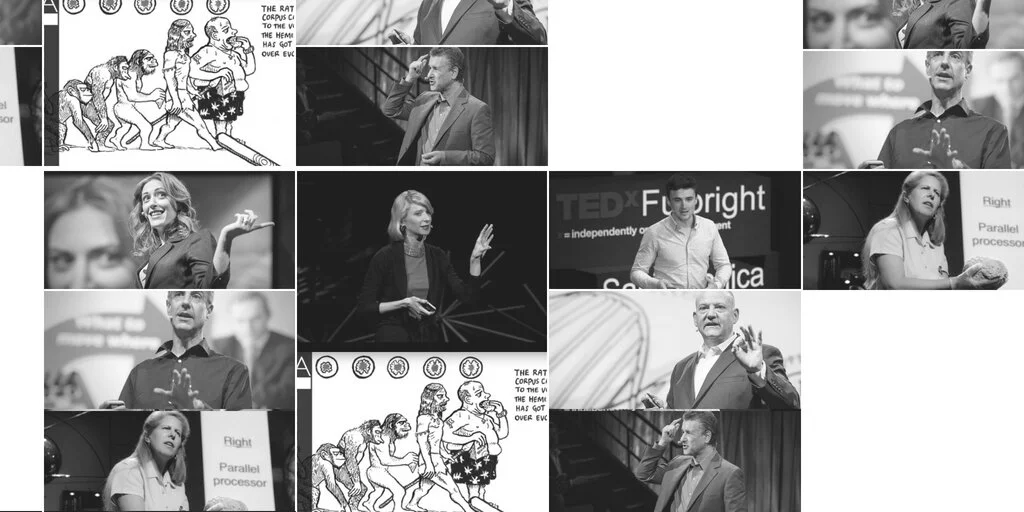
9 TED Talks On Neuroscience That Will Inform, Inspire & Move You
This post on my favorite neuroscience-focused TED talks is consistently one of my most popular posts. It’s an oldie but a goodie. I still love the diversity of these talks and the insights they can offer for living an embodied and well life.

Working With Self-Judgment In Embodied Movement
This audio is part of the Conscious Movements Co-evolution private podcast within The Embodied Well membership. I'm sharing it here because I've seen too many people bypass moments that could nurture deep healing and profound growth.
I can't speak for all Feldenkrais practitioners, but I'm not attached to someone reaching some arbitrary endpoint in a lesson. I'm far more interested in people befriending all of who they are so that they can understand the language of their bodies and expand their capacity to hold space, lead, and thrive.